
2026-11-13
The inquiry that sat overnight: follow-up for Springfield service businesses
Leads go cold in hours, not days. Here is what a simple follow-up system looks like for an Ozarks service business, and when it should be custom software.
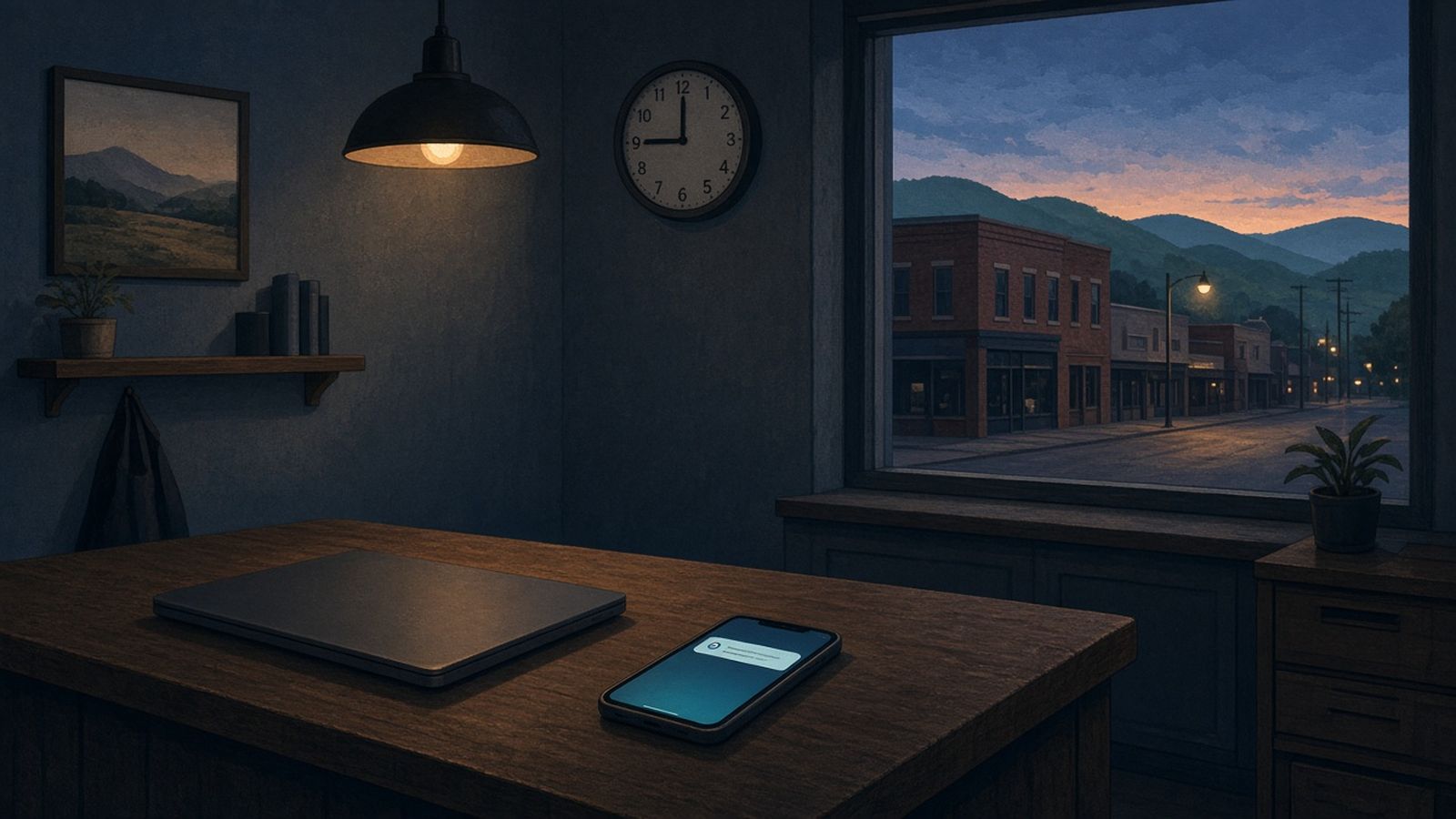
Before a Springfield service business buys more leads, check what happens to the ones it already gets. A follow-up problem can look like a lead problem.
The form on the website works. The phone rings. Somebody messages on Facebook at 9:40 at night asking if you can come look at a leaking water heater this week. Then the message sits until morning, or until Thursday, or until the person who usually answers gets back from a job in Ozark. By then the customer already booked somebody else.
That is a workflow issue. It is usually fixable without a giant platform.
How fast a lead actually goes cold
There is older research worth looking at, with some limits. In a Harvard Business Review study of online sales leads, researchers looked at 1.25 million leads received by 42 U.S. companies. Firms that tried to reach a customer within an hour of the inquiry were nearly seven times as likely to have a real conversation with a decision maker as firms that waited even one more hour. Compared with firms that waited 24 hours or longer, they were more than 60 times as likely.
These were 2011 findings, not a forecast for Springfield shops in 2026. But they are a reason to check response times instead of guessing. A five-person shop in southwest Missouri needs the inquiry to land somewhere that makes the next step obvious.
Describe a Tuesday
When an owner tells us follow-up is a mess, we ask them to describe a normal Tuesday. Where does a new inquiry show up? Who sees it first? What do they do with it? Where does it go when they are busy?
The answers usually look like this. Website form emails go to one inbox. Facebook and Instagram messages go to whoever has the app on their phone. Calls go to the shop line, and the voicemail gets checked when someone remembers. The "system" is a whiteboard, a notebook, or a spreadsheet one person keeps up to date.
Each of those tools is fine on its own. The trouble is four front doors and nobody owning the hallway.
There is also a recent change worth knowing about. Google turned off chat on Business Profiles. As of July 31, 2024, the chat and call history features are no longer available in a Business Profile. If customers used to message you through your Google listing, those conversations did not move somewhere else on their own. Google now points eligible businesses toward a text message or WhatsApp option instead. If you have not checked your listing since then, check it. Make sure the phone number and website link are correct, because those are now the main ways people reach you from Maps.
What a simple follow-up system does
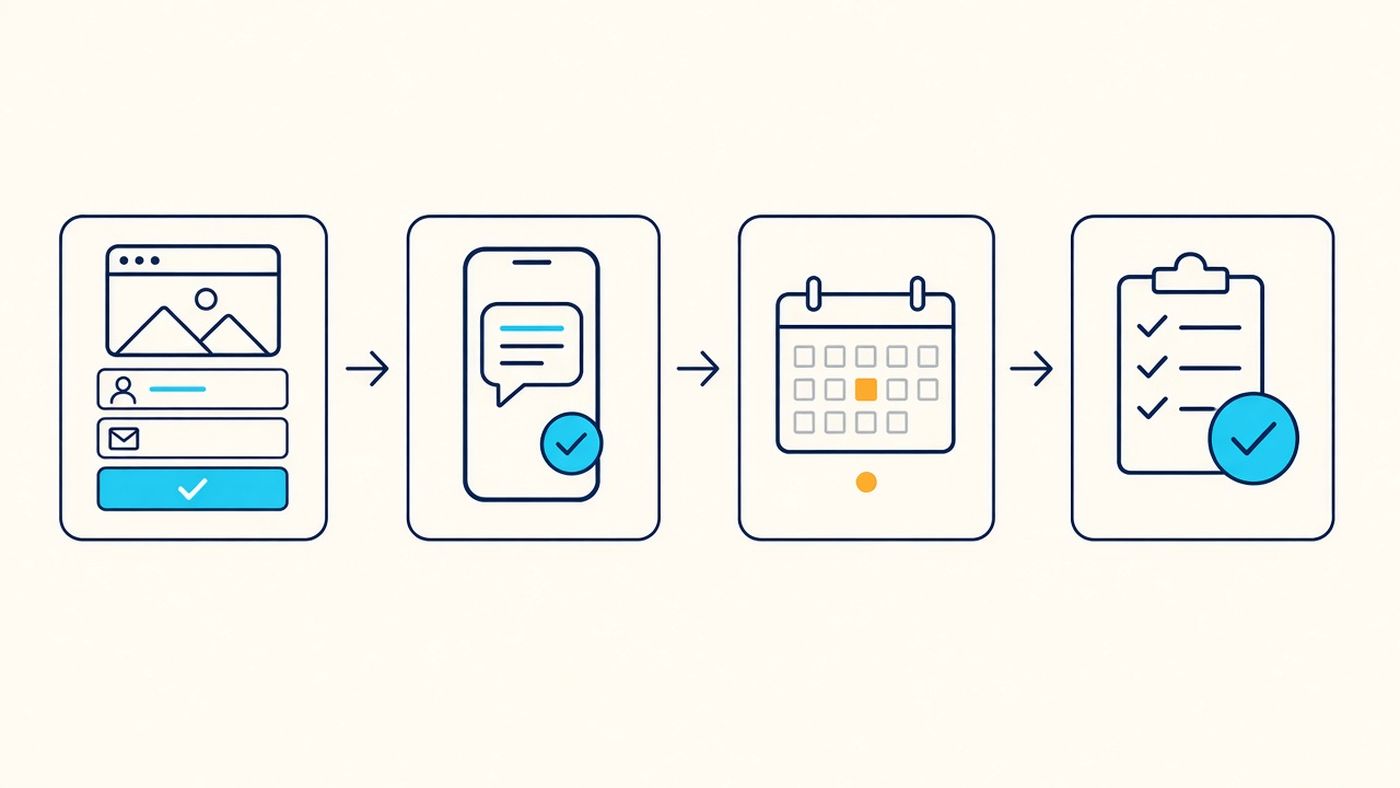
Telling people to answer faster does not work. They are already busy. What works is making the first reply automatic and the second step obvious. In plain terms, a working setup does four things.
- One inbox. Every inquiry, from the site form, the phone, and social, ends up in one list with a name, a way to reach them, and what they asked for.
- An instant first reply. The customer gets a short text or email right away that says you got it, what happens next, and when they will hear from a person. It tells them the message reached you. It does not replace a real reply.
- A next step they can take themselves. A link to pick a time, or a short set of questions that gets you what you need to quote. Fewer round trips.
- An owner and a nudge. Each inquiry belongs to someone. If nobody has touched it in a few hours, it bumps up. If a quote went out and nobody heard back in three days, it reminds you.
That last one is easy to forget. Plenty of jobs slip away after the quote goes out and nobody checks back.
Buy it first, if it fits
We will say this plainly: a lot of service businesses do not need custom software for this. If you run one crew, take most work by phone, and your booking is "call and we will fit you in," a decent off-the-shelf field service or CRM tool will cover it. Turn on the auto-reply, connect your website form, and use it every day. That is the whole job.
If a normal product already covers your workflow, we will tell you to buy it.
Custom work starts to make sense when the off-the-shelf tool keeps fighting how you actually operate. A few signs we see around Springfield, Nixa, Republic, and Branson:
- Your scheduling depends on things a generic tool does not know about, like which tech is certified for which job, which room or bay is free, or how far a crew has to drive across Greene and Christian counties in one day.
- The spreadsheet is still the system of record, and the CRM is a second copy nobody trusts.
- You are paying for three tools that each do part of the follow-up, and someone copies information between them by hand.
- Your process lives in one person's head, and when they take a week off, inquiries pile up.
When that is the picture, the right build is usually small. A web app your team logs into, connected to the website form and a texting service, with the rules you already follow written into it. It does not have to replace everything. It just has to stop the leak between the front doors and the job board.
Where AI fits, and where it does not
AI is useful here in narrow, boring ways. It can read a long rambling form submission and pull out the address, the job type, and how urgent it sounds. It can draft the first reply so a person just reviews and sends. It can sort which inquiries are a real job and which are a vendor trying to sell you something.
What it should not do is pretend to be you and promise a time or a price. Customers in the Ozarks can tell when they are talking to a bot, and a wrong promise costs more than a slow reply. Keep a person on anything that commits the business.
Texting customers also comes with rules. Get permission when they first reach out, honor "stop" right away, and do not add people to a marketing list just because they asked for a quote once. A follow-up text about the job they asked about is a different thing from a promo blast.
Free local help before you spend anything
If you are not sure whether your follow-up problem is a tools problem or a process problem, talk it through with someone first. The Missouri SBDC at Missouri State University, part of efactory in downtown Springfield, offers no-cost one-on-one consulting to eligible small businesses and serves 15 counties in southwest Missouri, from Greene and Christian out to Taney, Stone, Barry, and Howell. That is a good place to sort out the business side before you pick software.
You are also in good company. The SBA Office of Advocacy's 2025 profile counts 590,131 small businesses in Missouri, 99.4% of all businesses in the state. Construction and other services are two of the biggest groups. That is a statewide count, not a count of Springfield service shops.
Where to start this week
Just do one thing first. Pick a time today and count where your last 20 inquiries came from, how long each one waited for a first reply, and how many got a second follow-up after the quote. Write it on paper if you have to.
If the numbers look fine, keep doing what you are doing. If they do not, that list is the scope for the fix, whether it is a tool you buy or something we build. And if we look at it and a normal product covers it, we will tell you.